Anti-Vaccination and the Persistence of Misinformation in a World Full of Evidence

Since I can remember, I have marveled at – and been occasionally stunned by – the astonishingly broadscale rejections of sound science. Even after learning about psychological constructs such as belief perseverance (hanging on to one’s beliefs even when shown evidence to the contrary) and confirmation bias (formulating a conclusion that resonates with one’s personal biases, and then looking for supporting evidence), I don’t get it.
Seriously. I really don’t get it.
The emergence of predator/prey and parasite/host interactions have been present since complex multicellular organisms evolved more than 500 million years ago. While the history of viruses is shrouded in history (they don’t leave fossils), it’s pretty clear they have been on Earth for a long, long time, too. Most viruses don’t bother humans, because they are specific to other organisms. But there are a few that are really pesky, and some are downright life-threatening.
Vaccination is one of the greatest success stories in public health. It prevents millions of deaths each year and has dramatically reduced – even completely eliminated – diseases that once terrified humanity. And yet, despite overwhelming evidence, opposition to vaccines persists. Weirdly, the “anti-vax” phenomenon is not new – it has been around about as long as vaccines themselves.
Humans have been arguing about vaccines for centuries, and they have been wrong about them for almost as long.
Early Vaccine Resistance: Fear, Distrust, and Bad Timing
Resistance to vaccines dates back to the 18th and 19th centuries, when the first smallpox vaccines were introduced. You may have heard about Edward Jenner’s stunning success in developing the vaccine for the smallpox virus in 1796, based on the observation that those who contracted the much more benign cowpox were subsequently immune to the often-deadly smallpox. It’s a fascinating story, and an example of really good science!
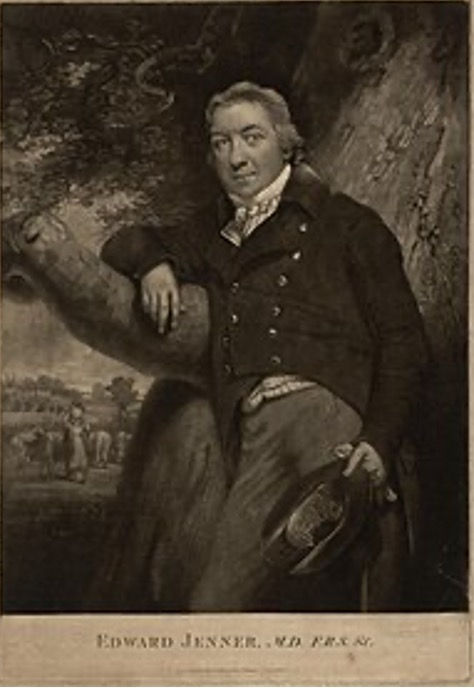
Fun fact: Jenner named the procedure after the Latin for cow, vacca.
Opposition to vaccinations surfaced quickly. Resistance came religious leaders, from the kooky “appeal to nature” argument – which held that we should only be exposing ourselves to what is natural (this is really dumb…uranium is a naturally occurring element, so let’s use it to spice up our burgers!) and the supposition that physicians only promoted vaccines to increase their profits (Jenner, in fact, refused to profit from his vaccines, and is known to have administered them to poor people for free).

The evidence, however, quickly became clear: wherever vaccination rates increased, death rates from infectious diseases plummeted.

Incidentally, have you known anyone to have contracted smallpox recently? Me, neither. Why is that? A decades-long vaccination campaign was so successful that the World Health Organization (WHO) declared smallpox eradicated in 1980. Gone from the face of the Earth! Indeed, researchers reported in one study that more than 150 million lives have been saved by vaccines since 1974 (https://www.thelancet.com/journals/lancet/article/PIIS0140-6736(24)00850-X/fulltext).
Science worked. People argued anyway.

The Modern Anti-Vaccination Movement
The most influential chapter in modern anti-vaccination history began in 1998, when Dr. Andrew Wakefield published a paper in a journal called The Lancet, suggesting a link between the measles, mumps, and rubella (MMR) vaccine and autism.
The idea was based on two observations:
Autism symptoms often become noticeable around age two – the same time children receive several vaccines.
Autism diagnoses have increased over the past several decades.
At first glance, this may seem suspicious. Unfortunately, this is a classic example of confusing correlation with causation, which science students are warned about approximately every five minutes for a reason. A bit more on this later.
When Science Took a Closer Look
The Wakefield study raised some red flags. It was deeply flawed: it included only 12 participants (sample size is a really big deal) and lacked proper controls. Later investigations revealed even bigger problems: ethical violations, undisclosed financial conflicts of interest, and selective use of data to support a predetermined conclusion.
In short, the study was not just wrong – it was fraudulent.
The consequences:
The Lancet retracted the paper.
Wakefield’s medical license was revoked.
His co-authors retracted their names from the study.
The British Medical Journal later published a piece that described the work as an “elaborate fraud.”
Meanwhile, science did what science does best: it kept testing. And testing. More and more studies were conducted. Large-scale, well-controlled studies involving more than 1.2 million participants, conducted around the world, consistently found no link between vaccines and autism. Look, if there was a link here, researchers would have found it.
The Evidence Piled Up (And Kept Piling Up)
Since 2003, multiple studies conducted by organizations such as the Centers for Disease Control (CDC) and WHO have found:
No association between vaccines and autism spectrum disorder
No causal role for vaccine ingredients like thimerosal
No increased autism risk from the MMR vaccine
At this point, the evidence isn’t just strong – it’s overwhelming. And yet, the original claim refuses to disappear, largely because it has been propagated by conspiracy theorists on social media, celebrities (non-scientists…of course), and internet forums – all without evidence.
Why Anti-Vaccination Beliefs Persist
Anti-vaccination movements don’t persist because of new scientific discoveries. They persist because of our wacky human psychology. Cognitive biases like confirmation bias and belief perseverance make people really good at accepting information they already agree with and really bad at letting go of ideas they find emotionally compelling.
Add fear, distrust, and a viral Facebook post by someone who “did their research” (ha!), and misinformation spreads faster than most infectious diseases. How’s that for irony.
Real Consequences for Public Health
Vaccine hesitancy is not harmless. Lower vaccination rates have led to the return of preventable diseases and outbreaks that should not still be happening in the 21st century (think: measles). The WHO has identified vaccine hesitancy as a major global health threat, warning that it undermines one of the most cost-effective tools in medicine.
Science, Evidence, and the Takeaway
So, back to the two observations:
Autism symptoms often become noticeable around age two – about the same time children receive vaccines.
Autism diagnoses have increased over the past several decades.
How do we explain these? It’s pretty simple, really: #1 is a correlation/causation issue – just because two variables correlate (as one goes up, the other one goes up, or down) does NOT mean one is necessarily causing the other. Look, an increase in stork sightings does NOT mean that more babies are being born! With #2: we have learned a great deal about autism over the past several decades, which has led to a more refined analysis of toddler-aged behaviors and whether they show signs of autism, leading in turn to more successful diagnoses – it’s that simple.
The history of anti-vaccination movements serves as a powerful reminder of how science works. It’s a process. Bad studies do, very rarely, get published (Wakefield’s paper should never have been published in the first place) but they do not survive the scrutiny of replication, ongoing peer review, and the accumulation of additional evidence. Scientific conclusions are based on carefully collected data, not on anecdotes or how convincing someone sounds on a podcast.
Let’s be clear: where important matters are concerned, we need good information. Let’s be sure that 1) the source of information is solid – do they have the correct credentials, or were they simply appointed by a politician because they showed loyalty? and, 2) recommendations are based upon sound scientific findings and associated evidence, not wild conspiracy theories.
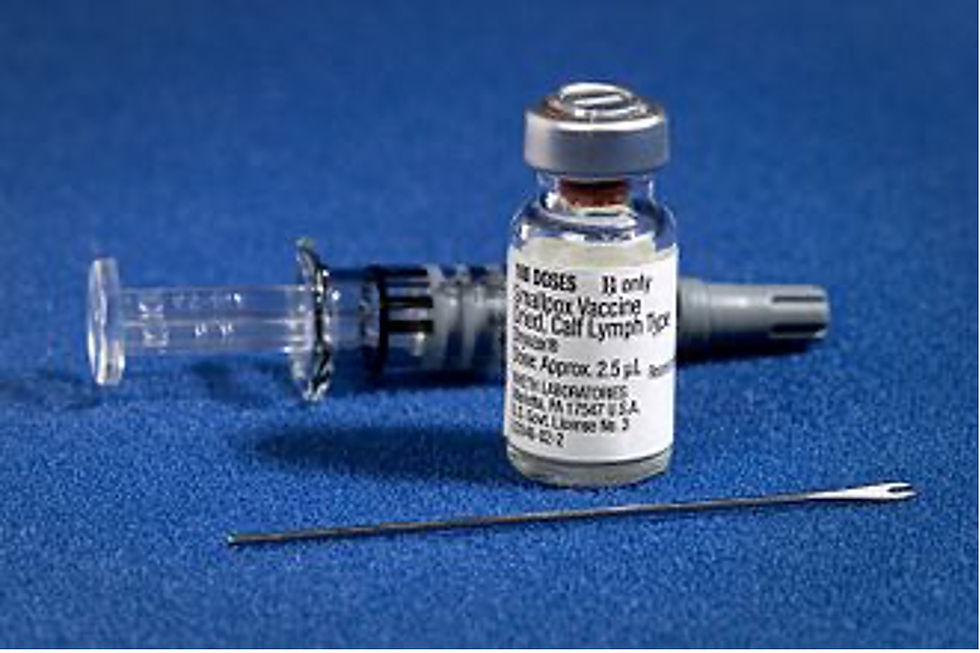
Vaccines remain one of the greatest achievements of modern science not because they were never questioned, but because they were questioned thoroughly. This is how science works. And, never before has a scientifically literate populace been as important as it is right now: scientific literacy enables informed decision-making in a world where misinformation is always just one click away.