One Humanity: Biology, Race, and a Lesson I Didn’t Know I Needed

Reflections on science, society, and our shared humanity for Martin Luther King Jr. Day
On the rare occasion when I am asked for my ID, my usual reaction is to laugh a bit while forking over my driver’s license, and sometimes I’ll throw in the comment, “I’m happy to confirm that I am wildly in excess of 21!” It seems likely at this point in my life that the majority of stuff I will learn in my lifetime has already entered my head. So, I’m surprised sometimes, when I learn something new, especially when it feels like an epiphany. I owe a great deal to others for my learning, as does everyone, and I’m always up for giving credit to whom it is due.
I had something of an epiphany a couple years ago while traveling with a brilliant former student to an international conference being held in the deep south, where my student was presenting some research results. We were driving, and we needed to stop for gas and a break, so I pulled off the highway and into a gas station in rural Mississippi. My student looked out the window at the gas station and asked the question, “Is this a white place or a Black place?”
My former student identifies as Black.
This felt like an epiphany to me – this seemingly simple question sunk in to the core. And I am also kind of embarrassed that I had never really, truly, deeply considered this scenario before. White privilege. Never in my life had I felt the need to worry about this.
And it was this very same student who asked for a word with me following class one day. During class, I had made the comment, “From a biological perspective, there’s no such thing as race.”
From a Biological Perspective, Race Doesn’t Exist
Even though no offense was taken, my student suggested that I think more carefully about making such statements, because it might sound to some that I was trivializing race as a concept. And this also made me take a mental step back. I’d never want to do or say anything offensive, and I actually thought my comment might be well-received. After all, I was talking to a bunch of biology majors, who I thought would “get it”. What I was missing, however, was the importance of embracing race as a cultural construct, one not based on skin color. And this was a mistake.
I apologized at the beginning of my next class for my insensitive comment.
Biologically, when we talk about “race,” it may sound like a fixed, biological fact – something written into our DNA. But from the standpoint of modern biology and genetics, race as a biological classification simply doesn’t exist. In fact, biologists and anthropologists alike reached this conclusion a century ago. Awkward for biology textbooks from the early 1900s, but, you know, progress happens.
Okay, so hold on. This doesn’t mean human differences aren’t real. They are. People vary in skin color, facial features, hair and eye color, and many, many other traits. What biology tells us, however, is that these differences don’t divide humanity into distinct, natural groups.
Traits commonly used to define race, like skin color, turn out to be especially misleading. Skin pigmentation is mostly an adaptation to sunlight – essentially nature’s long-term response to how intense the sun is where your ancestors hung out. It tells us about UV intensity of our ancestors’ environment, not about deep biological divisions. In fact, two people with similar skin tones may actually be relatively distant genetically, while two people with very different skin tones may be closely related.
There are biological reasons why such variations exist in populations, namely random mutation events (It is, in fact, genetic variation – produced by mutations – that serves as the raw material for evolution through natural selection. But that’s a topic for another day!).
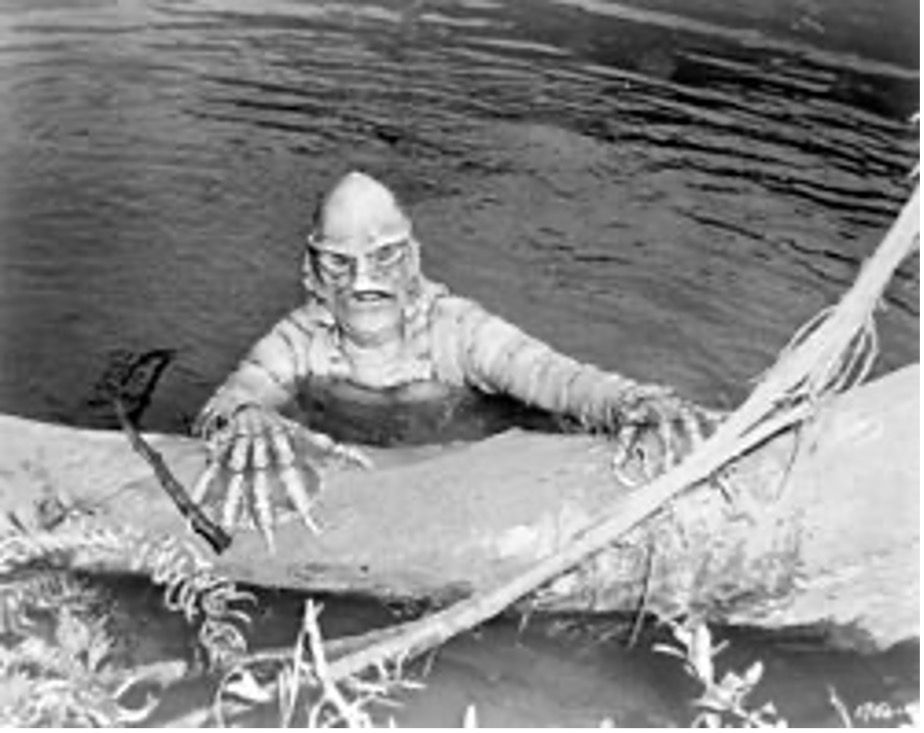
Contrary to what Hollywood films have portrayed, mutation events are real and produce tons of neutral variations in populations – that is, they often don’t confer advantages to the recipient (though sometimes they do in important ways). Think about it like this: some of us have attached earlobes, others have dangly ones. All other things being equal, would either earlobe type give the owners any advantage for long-term survival and reproductive success? Doesn’t seem likely. They are simply neutral variations in our population.
Genetically, humans are remarkably similar overall. Any two people on Earth share nearly 100% of their DNA. The small fraction that does vary does not cluster neatly into racial categories. Instead, genetic variation is gradual and continuous, changing slowly across geographic regions rather than jumping abruptly from one “race” to another. This pattern is known as a cline. In other words, human genetic variation is continuous and overlapping. “Race”, therefore, is not a precise biological classification system. Rather, it’s a social classification that loosely correlates with ancestry and geography.

The reason we see this gradual variation in skin color is because there are literally dozens of different genes that influence the production of melanin, the pigment responsible for skin color. And each one has a small effect on melanin production. So, how much melanin an individual produces (that is, how dark their skin is) depends in part on the particular version of these genes that person carries. Geneticists refer to this as “polygenic inheritance”. Further, like many others, these genes interact with the environment – in this case, exposure to UV radiation leads to greater melanin production, resulting in a “tan”.

There’s a bigger picture point here, too: categories do not exist in nature like we imagine. Nature is, instead, more like one giant spectrum. I’ll save comments on that for another time.
So, what about traits that do vary by region? A couple of things: 1) These traits are controlled by a relatively small number of genes, 2) They reflect adaptation to local environments, and 3) They vary clinally (gradually across geography), not in discrete racial blocks.
In fact, there is often more genetic variation within so-called racial groups than between them. As I already mentioned, two people classified as the same race may be less genetically similar to each other than either is to someone from a different “race”. If race were a legitimate biological classification, we would expect clear genetic lines separating groups. We simply don’t see that in human DNA, nor do we see it when we look around at each other.
Because of all this, biologists largely abandoned the idea of human races decades ago. Nature is subtle. Humans are the ones who love categories.
Okay then: This does not mean race is “imaginary” in everyday life. Race is a real cultural construct that shapes people’s experiences and perspectives through languages, ancestry, religion, and traditions. Societies do divide people into races, and those categories are created, named, and maintained through history, politics, and culture rather than DNA. But acknowledging – and embracing – race as a social reality is different from claiming it has a biological foundation. It doesn’t. Confusing the two has historically fueled racism and provided false justification for inequality under the guise of nature.
From a biological perspective, humanity is one interconnected, slightly messy, highly adaptable population. We differ, yes – but not in the way race suggests. Beneath the surface, we’re far more alike than we are different. Which, honestly, is kind of impressive for a species that can’t even agree on how to pronounce “GIF.”
Understanding that race is not biological doesn’t erase human diversity – it reframes it. It reminds us that variation is a natural part of being human, and that our differences exist on a spectrum rather than in separate, discrete boxes. From a biological point of view, humanity is one interconnected population.

Let us, on MLK day and every day, embrace our rich cultural heritages while recognizing that we are all part of the same human fabric. We are all just humans, no more, no less.